April 5, 2026 : Easter Sunday ~ Christ is Risen!
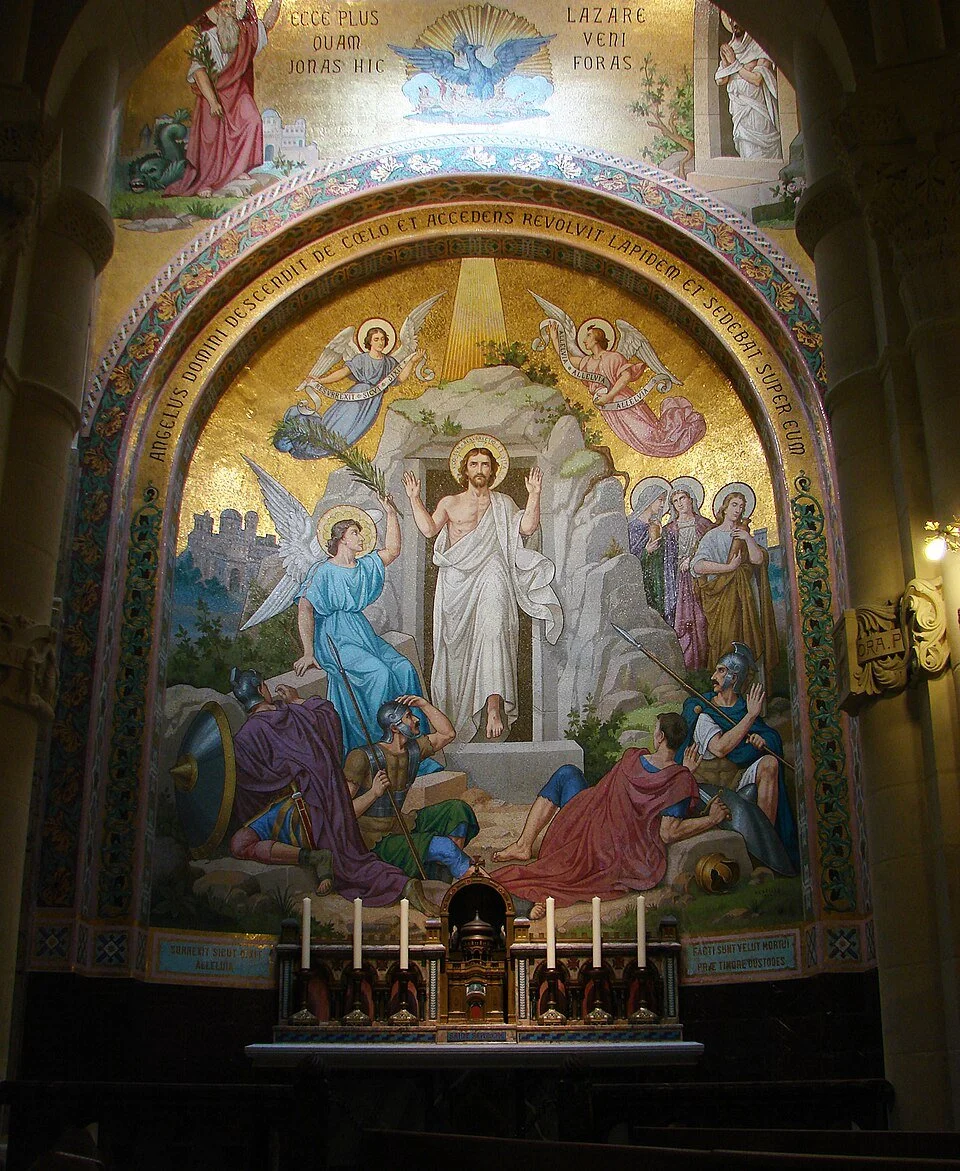
Christ is Risen!
Jesus Christ: the Way, the Truth, and the Life ~
In past pastor’s columns at Easter, I’ve written about the Resurrection of Jesus Christ. This year I want to write about a different kind of resurrection, that of the Church. As we are all painfully aware, the Church has been in decline for the last 60 plus years. The percentage of Catholics attending Mass, being baptized, getting married in the Church, ordained, solemnly professed to religious life, etc., every conceivable metric, has shown the Church in decline for 65 years. That decline accelerated in the aftermath of the Covid lockdowns.
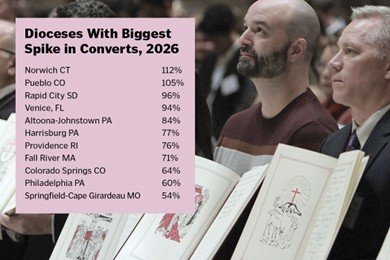
With that said, we're seeing something incredibly special this year in our OCIA program (Order of Christian Initiation of Adults). OCIA is the Church’s process by which people are catechized and enter the Church. At the Easter Vigil Mass, over 50 people from our parish family will have entered the Church. That is the greatest number we’ve ever seen. Yet those kinds of numbers are not unique to our parish family. Catholic news sites—and even non-Catholic ones—are reporting numbers of people coming into the Catholic Church this year that we haven’t seen in many years. Some of my priest friends are reporting similar dynamics in their parish families. So, what’s changed? What’s behind the striking increase in converts in so many dioceses around the world?
Since the Second Century, marriage has been the number one driver of conversion to the Catholic faith. A non-Catholic marries a Catholic and eventually the non-Catholic becomes a Catholic. Or a spouse becomes a Catholic and the other spouse eventually follows them into the Church. That’s happening of course but not in smaller numbers than we’ve seen in the past, so it doesn’t explain the recent increase in conversions.
Then there is the desire to journey with others in the faith. People join the Church because a friend, or friends, or other family members are Catholic, and they want to be part of that extended community of faith.
Then there are the personal and societal dynamics of celebrated immorality, emptiness, loneliness, meaninglessness, depression, failure, loss, etc. In a word disillusionment. These things lead some people to seek more, and the “more” they are seeking leads them to God. A God that society doesn’t acknowledge exists, yet people instinctively know does, and some seek to find. This group of people is well represented in our recent spike of converts.
Then there is Truth. Sometimes people find the pearl of great price or the treasure buried in the field, the Truth of Christ and His Church, and they risk everything to obtain it. They may even lose some or all of the important relationships I just mentioned to obtain the most important one—Christ and His family, the Church.
Marriage, a desire to belong to a faith community, meaning and health, and Truth have always been part of the human story. Yet they don’t explain why we’re seeing a jump in conversions now from say ten years ago or even sixty years ago.
Ironically, the answer to why we’re seeing such growth now is the internet. It just took time.
Amongst all the traditional reasons people join the Church, the internet as a tool for evangelization dramatically increases people’s exposure to the Church. This is where today’s increased number of converts are seemingly coming from. People see YouTube or Tik-Tok videos of people explaining the Catholic faith in short, simply ways, as well as videos of people who came into the Church explaining the reasons for their conversions. The internet has reached far more people with the Catholic faith globally than prior to it. Just think of Fr. Mike Schmitz, Bishop Robert Barron, Dr. Taylor Marshall, Jeff Cavins, Trent Horn, Catholic Answers, and people nobody’s heard of. People aren’t looking for these people when they go on the internet, but they see them in their feeds and click on them out of curiosity. Then their world opens up. With all the trash on the internet, especially time wasted, there is the rare redeeming quality of evangelization. This seems to explain why there are more people coming into the Church across the country and even the world. Exposure.
These converts coming into the Church are more knowledgeable and committed than most cradle Catholics (those born into the faith). Cradle Catholics often become cultural Catholics, Catholic because of their environment alone. When that environment no longer supports the inconvenience of practicing the faith, these Catholics fall away. So, while the percentage of Catholics who practice the faith (Mass attendance, etc.) continues to go down (see first paragraph), we are gaining a smaller but more committed core of true believers. This bodes well for the future. If you are a convert to the Catholic faith, or a re-vert to the faith, your conversion is a powerful witness for others and a source of hope.
When Jesus rose from the dead, none of His followers could have foreseen what would become of His Church. The catholic – universal – nature of it, or its reach down through time. Those first disciples were absolutely convicted to risk everything to share the Gospel—the good news—of Jesus Christ to a world hungry for Truth and salvation. That world is still hungry, and there are still people who will risk much, some even everything, to obtain the treasure buried in the field or the pearl of great price, and to share it with others. For those who entered the Church this Easter – welcome home! May their example inspire all of us to a deeper faith and hope in the Church’s Resurrection and future.
I have attached here an abridged version of an article (there are many on the internet) by the National Catholic Register on the recent spike on conversions to the Catholic faith. Enjoy.
May Jesus Christ, the Risen Lord, Bless You,

Fr. Thomas Nathe
https://www.ncregister.com/news/catholic-converts-surge-us
Many U.S. dioceses are expecting heavy increases in people joining the Catholic Church at Easter 2026, including some with record highs, a survey by the Register found.
In most places, this year’s increases aren’t a one-off but follow significant increases in recent years.
In the Archdiocese of Philadelphia, which is expecting a 60% increase in converts in 2026 over last year, a priest who oversees conversion programs said people seeking to join the Catholic Church tend to come to Mass and have an active prayer life before they ever attend formal sessions with catechists, and that they tend to accept Church teachings earlier in the process than their predecessors did.
“I have noticed over the last several years that there is a greater commitment to conversion, a greater commitment to the Church, when they arrive,” said Father Dennis Gill, director of the Office for Divine Worship for the Archdiocese of Philadelphia and rector of the Cathedral Basilica of Sts. Peter and Paul.
“Our numbers exploded this year,” said Barbara Ferreris, director of faith formation at Sacred Heart. “Many of the converts are in their 20s and 30s, most of them single. They have a career. They have the home, the car. They’re searching for more,” Ferreris explained. “They want more, and they know God is calling them. God is calling them and they’re responding.” The young-adults theme came up repeatedly in interviews with diocesan officials.
“There’s especially in young adults a strong desire for solidity, stability, and objective truth. We live in a world where truth is evasive,” Nelson, of the Diocese of Fort Worth, told the Register. “Even if you don’t know and love Jesus, you can see that the Church has a solid foundation. We don’t change with the times.”
Bishop Frank Dewane, who leads the Diocese of Venice, Florida, told the Register the Church is enjoying what he calls “a golden age of Catholic resources,” including podcasts and other online sources that get information about the Church to people who would ordinarily never set foot in it, and yet come to find Catholicism unexpectedly attractive.
“While we may see a decrease in cultural Catholicism, we see an increase in people becoming Catholics by personal choice,” said Father Juan Ochoa, director of the Office for Divine Worship for the Archdiocese of Los Angeles, which is expecting a 54% increase in converts this Easter. “The cultural Catholics in the United States may be decreasing, but the life of the Church in a different way is emerging.”