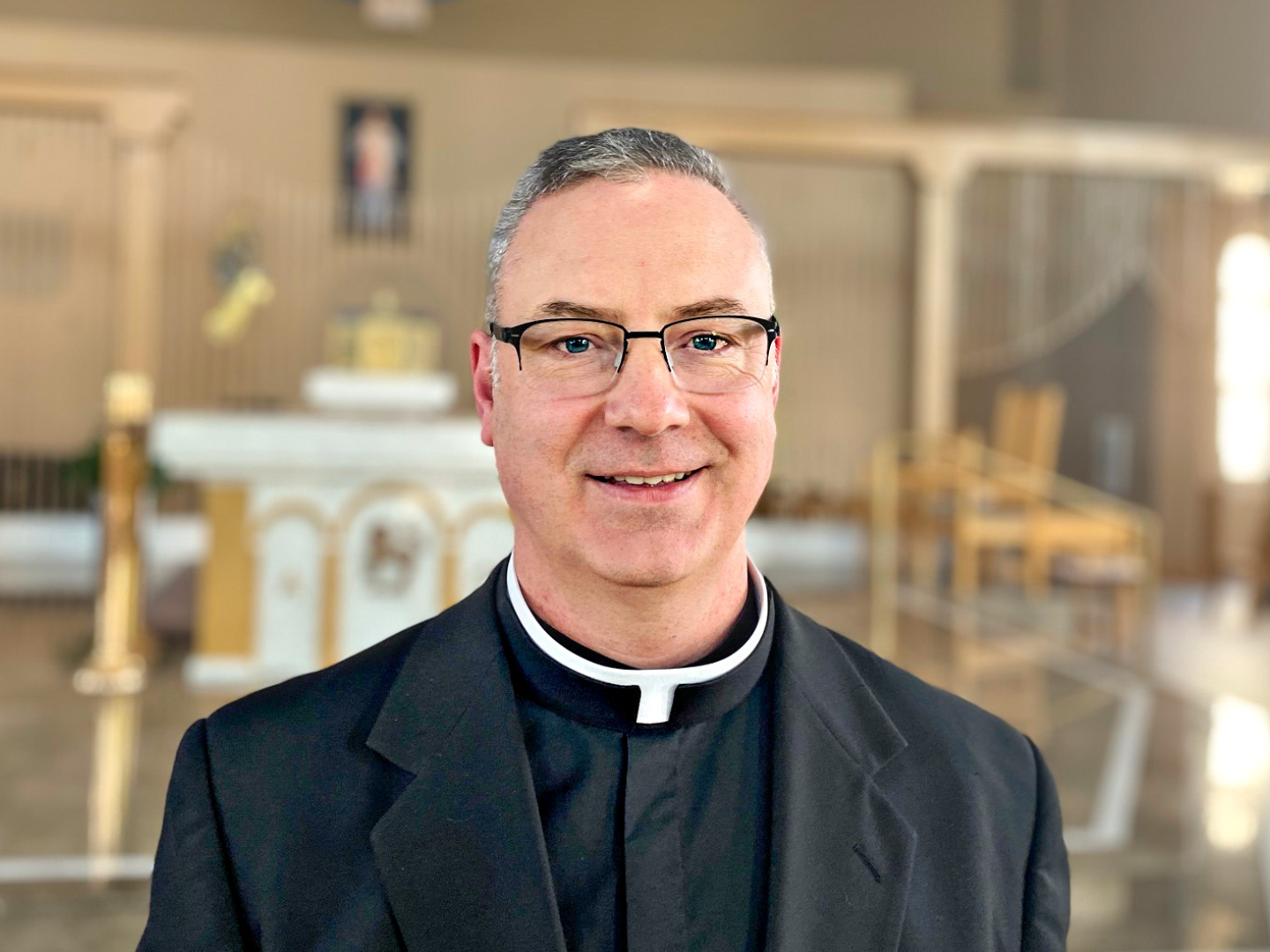
February 8, 2026 : Parish Mission
February 8, 2026
Jesus Christ, Yesterday, Today and Forever,
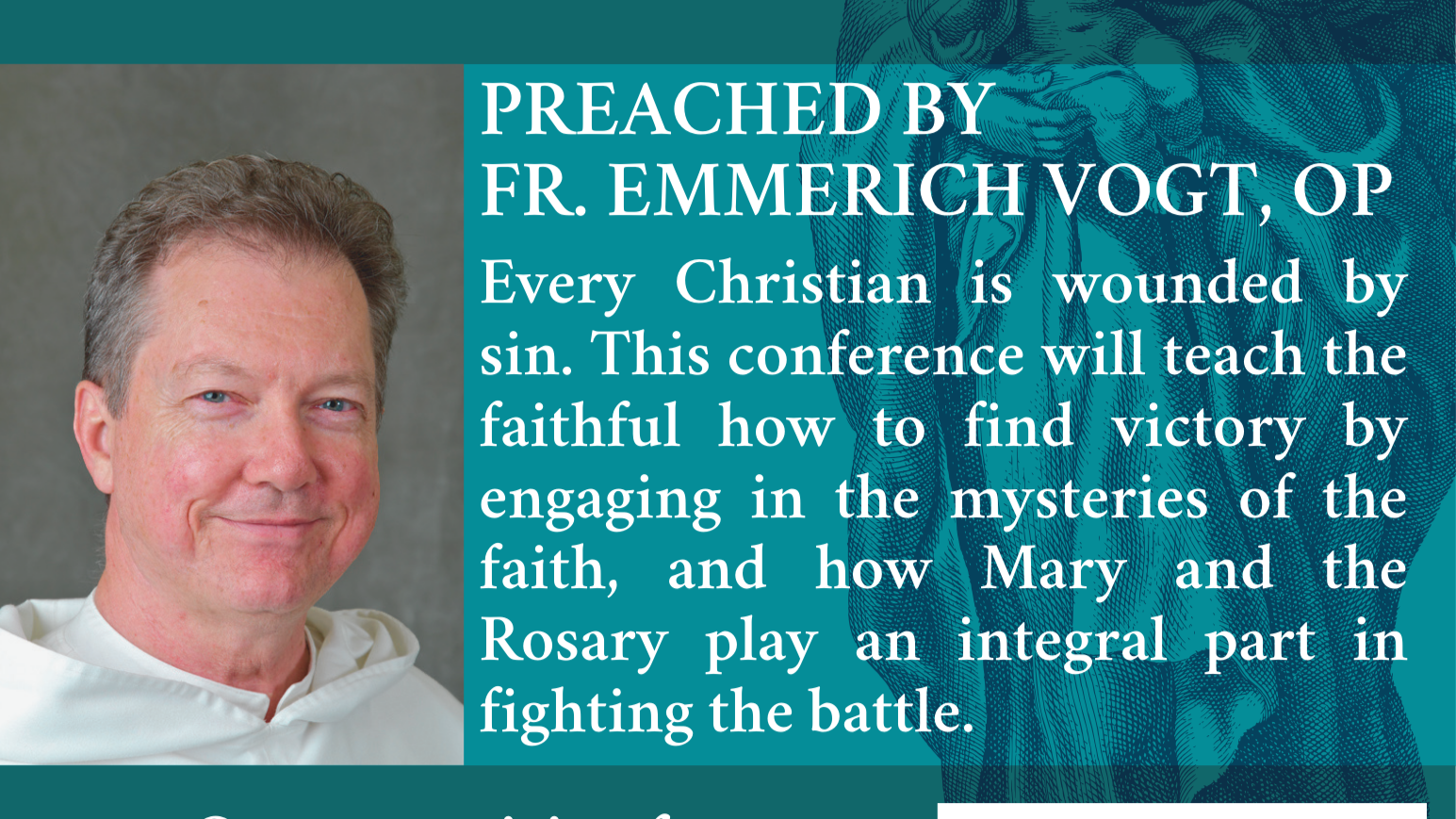
Beginning this weekend, Fr. Emmerich Vogt (Dominican) will begin a pre-Lenten mission at Holy Redeemer by preaching at all the Masses. The mission will end on Thursday, February 12. I hope you can make at least some of the mission, if not all of it. Here is the schedule:
Monday, February 9 – Thursday, February 12
· 8:30am: Daily Mass (no homily)
· 9:00am: Conference Talk – Option 1 (same as evening conference)
· 10:00am: Confessions (Monday-Wednesday)
· 6:00pm-6:45pm: Confessions (Monday-Wednesday)
· 7:00pm-8:00pm: Conference Talk – Option 2 (same as morning conference)
Socials to follow both conferences on Thursday, February 12
Below, Fr. Emmerich has been so gracious to give us an introduction to the mission. I hope to see you there!

Fr. Thomas Nathe
In Sacred Scripture Jesus refers to His Father as “Lord of Heaven and Earth” (cf. Matt 11:25; Luke 10:21). And we know from the beloved disciple St. John that this God, who is Lord of Heaven and Earth, is Love personified (I John 4:8). Thus, Love is Lord of heaven and earth. This should be a source of great consolation to us Christians for it means that whatever happens in our lives, God would never do anything contrary to love or to our salvation. Whatever occurs becomes part of God’s plan for our salvation. This is our faith and hope.
Our parish mission will explore this truth in the context of the sacred mysteries of our faith as they are expressed in the Rosary. At every apparition of our Lady at Fatima, she stressed the praying of the Rosary and in the context of a World War. It can’t be an accident that she appears during the worst military conflict in human history. She came with a message for her children, and it has to do with the Rosary.
The Sanctuary of Fátima is officially titled “Sanctuary of Our Lady of the Rosary of Fátima.” We will also explore the connection between the mysteries of the Rosary and the theme of God as Love. The great theologian and friend of Pope Benedict, Fr. Von Balthasar once remarked: “The Christian knows what the philosopher does not.” There are many philosophers in the world with great minds. There were many in the ancient world whose ideas still impact society today, such as Socrates, Plato, Aristotle, Pythagoras, Heraclitus, etc. They had brilliant minds. But the Christian knows what these philosophers never realized: that God is love. It is a truth which comes from Revelation alone.
This, then, is the central theme of our parish mission: Love. Our sub-theme has to do with the mysteries of our faith, because if we are to follow the Lord who is Love, we need to incarnate the mysteries of our faith in our daily lives as Christians, for this is what it means to be a Christian follower of Christ, the living out in our lives the mysteries of the life of Christ, our Savior. So, our sub theme is what I like to call Rosary Asceticism. Asceticism is self-discipline. Self-discipline is self-caring. It means picking up the Cross that gives life and following Christ by living these mysteries that have been revealed to us, as Jesus proclaimed: ““Knowledge of the mysteries of the kingdom has been granted to you” (Matt 13:11).
How blessed we are to have these mysteries revealed to us. We should be deeply grateful for they fill our minds with the beauty of our faith, while warming our hearts with that beauty, calling us to abide in truth. We contemplate the mysteries of the Holy Rosary as events no longer merely external but as miracles of grace now taking place within our own lives. Meditating on the mysteries can be described as mystic listening, because through these mysteries, the person of faith is invited into the very life of God Who has given us a share in His divine life through the grace of our baptism — the first Luminous Mystery. The Christian then becomes a soul enlightened by the mysteries of the Rosary.
In his document on the Eucharist, Pope Benedict explained the Eucharist in Three Parts: The Eucharist: A Mystery to be Believed — thus theology, having to do with the mind. The Eucharist: A Mystery to be Celebrated — thus the Liturgy; having to do with the heart. The Eucharist: A Mystery to be Lived, thus morality; having to do with the will. Mind, heart, and will — all three aspects of our soul are touched by this central mystery. It’s important for the Christian to deepen his knowledge of the faith, and it is equally important to enrich his heart with the celebration of this mystery, while endeavoring to carry out the divine will for his life. All three are equally important.
The classical definition of prayer comes from St. John Damascene. He was born in Damascus in 645, at a time when Muslims conquered Syria. He became a monk at Mar Saba Monastery, which is halfway between Bethlehem and the Dead Sea, one of the longest inhabited monasteries in the world. He defined prayer as a raising of the mind and the heart to God, whereby we receive the grace to carry out His will. And His will for us is LOVE.
So whatever happens in life, as people of faith, we do well to keep our hearts close to this truth — that God is love. Later in our mission conferences, we will look at the problem of suffering. If God is indeed love, why is there such suffering in this world? As Scripture says, it’s a stumbling block to Jews and foolishness to Gentiles, (I Cor 1:23); in other words, everyone.
We know through the certitude of our faith that we’ve been created in the image and likeness of God who is, as we have said, love. We were created in the image and likeness of Love itself. Sin is really a defacement of the image of God in which we were created. Jesus came to restore that image in us so that we can love rightly and thereby gain everlasting happiness in His kingdom, for His Kingdom is a Kingdom of Love. Christ taught us that love is the greatest commandment. It is our origin and it is our vocation. Love is the reason God created the universe.
Love is the only path to heaven; however, God does not make us chose the path of love. So there is tension between freedom and love. God cannot make truly loving creatures unless He gives them the freedom not to love. And that’s the problem of evil. We are free to choose what path in life to take.
Jesus is revealed in Sacred Scripture as the Light that shines in the dark for both Jew and Gentile. In His words and deeds, He lays out for His disciples the path that delivers from the darkness that is caused by the prince of this world. Our Lord said to Pilate, “My kingdom is not of this world.” We might ask, then, whose kingdom is this world? The Savior calls the Evil One the “prince of this world.” God, of course, is the ultimate Master and Lord of all things whatsoever, “of things on the earth, in heaven, and under the earth,” as St. Paul tells us (Phil 2:10). So why does the Lord Jesus call the devil “the prince of this world?”
It was our sins that gave Satan a certain dominion over the world because of the reality of free will. Only in the light of Christ can we overcome Satan, but the devil ever seeks to bring us under his dominion which is a darkness that blinds. Thus, we need the grace to carry our own crosses during our earthly sojourn in order to become the loving creatures we were created to be. Satan’s reign will only end at Jesus’ second coming. But we need a genuine understanding of the true nature of love.
In our parish mission we will discuss the biology of the theological virtues so faith, hope, and love and explain our Christian understanding of the virtue of love, as opposed to how Hollywood, for example, portrays love. For many of our Hollywood elites, love is purely and simply a feeling, an emotion. People, such as Adele, base their relationships on feelings which, of course, are short-lived, thus their relationships and/or marriages are also short-lived.
What God expects of us, above all else, is a serious application to evangelizing our feelings and emotions. To love one’s enemies is not to experience an attachment for them on the affective level, but to come to their aid whenever we can (Matt 5:43-48). Love must go deeper than mere feelings. But for Hollywood, sadly, love exists only in feelings; the feelings die, and they move on: such as the singer Adele. How do you know you love someone, such as your enemies? You bear them no ill will. Ill feelings: yes, but feelings in and of themselves prove nothing. True discipleship touches the heart of an individual. It requires a basic change in a person’s outlook on life. To follow in Christ’s footsteps, we are called to Metanoia, a fundamental conversion in our lives, that moves out of ourselves, out of a life of self-centeredness to instead lead lives that are totally dedicated to the service of God and to the service of those He has placed in our lives.
By meditating on the mysteries of the Rosary, we are asking God to continually have our hearts and character reshaped by grace so that we might become fit for heaven. Meditating on these mysteries excites love and sustains fervor, and strengthens us to fight against temptation. These mysteries become so interior that one comes to desire only what is of God and regret all that leads one astray from Him. As we participate in these mysteries, our desires are transformed, as is our intellect in its orientation toward truth. It is in these mysteries that the mystery of man truly becomes clear to him. The Rosary with its mysteries thus contemplated and received is Christ living His mysteries over again in us. And this 3-fold love (God, myself, and neighbor, whether the neighbor is friend for foe) is the only path to defeat sin and defeat death.
So come join our parish family mission as we prepare for the great mystery of Lent which prepares our heats to reflect the light of God’s love for all people.
Let us pray:
United Hearts of Jesus and Mary, You are all grace, all mercy, all love. Let my heart be joined to Yours, so that my every need is present in Your United Hearts. Help me to recognize and accept Your loving will in my life. Holy and Sacred Wounds of the United Hearts of Jesus and Mary, answer my prayer according to Your divine plan for my life. Amen.
Fr. Emmerich Vogt, O.P.