October 18, 2026 | Sacred Music
Jesus Christ: Yesterday, Today, and Forever ~
My pastor’s column will begin with some housekeeping items about music at Columbia River Catholic. Then the column will conclude with a discussion about Sacred Music, the style of music that the Church asks of Catholics at Masses where there is music.
On the first Sunday of Advent in 2028, the Church in the English-speaking world is going to implement a new translation of the Bible for Mass. This will result in replacing all of our pew missals and hymnals at that time (the red and blue books you see in the pews at Holy Redeemer and St. Thomas). At that time, Columbia River Catholic (new parish name by then) will begin using the same missal and hymnal throughout our parish family. That isn’t a concern for Holy Redeemer and St. Thomas Aquinas per se, as we are already using the same hymnals, but Our Lady Star of the Sea in Stevenson will be making some big changes. There we are using an annual missal/hymnal with different music from the other two parishes, and the music there is being led in large part by guitars, which are not used at the other two locations. To assist with the transition at OLSOS, we will not be subscribing to the annual missal/hymnal this Advent, but will start to use an in-house hymnal created by our Director of Sacred Music, Karl Rohde. If you attend Mass at OLSOS, you’ll see new things in your pew holders six weeks from now.
On to another music matter, this time at Holy Redeemer: the microphones in the choir area are sometimes hot, sometimes quiet, sometimes not picking up the singing, and we don’t know why. For the most part, the microphones in the choir area are simply not picking up the choir members. There are ins and outs to this, but that’s the bottom line, and we’re finally going to be taking another look at this.
The organ at Holy Redeemer is a separate music issue. Some of the keys/pedals don’t work. It’s an old organ, and the parts to fix it aren’t available anymore. We’ll need to get another one, but they are expensive, especially new ones. Hopefully we can find a good used one. We shall see.
Lastly, musicians. Almost all People are insecure. Musicians are brave enough to sing or play an instrument in public. I say brave because there is something personal about singing, akin to public speaking. When we sing or play an instrument in public we subconsciously believe we are revealing something intimate about ourselves. This means that giving musicians feedback that is anything less than glowing is challenging. Learning something new takes almost everyone out of their comfort level. Learning something new in the public eye is exponentially more difficult. For example: if a bookkeeper is told that one of their numbers is wrong, they would take a second look at it and correct it if that were true. They might even be grateful for the correction. Now imagine saying to someone who cantered at Mass that they weren’t loud enough; now they feel as if they made a fool of themselves, or that the one giving the critique is wrong or unfair. Sounding bad in public or stretching ourselves with things we don’t currently know can be very intimidating. So pray for those who sing or accompany singers at Mass, and pray for those who have to lead them. 😊 If you can sing, please share that gift with God and His people by joining a choir.
Related to people and music is the challenge of change. While I would love to have professional choirs singing Gregorian chant at every Mass with professional orchestras, that is not our reality. What is possible is a gradual and consistent growth in the sacred character of our music, working with the people who now serve us in this ministry. This means choir members and accompanists learning new music, perhaps a musical genre that isn’t familiar to them now. I trust and hope that our Director of Sacred Music can help us all make progress in this area.
Sacred Music itself.
Music is a gift from God. Every culture and society in the world from the dawn of time has had music. God put the music program or “app” in us. In fact, there is music in heaven too: choirs of angels, angels singing “Holy, Holy, Holy” around the throne of God, angels singing “Glory to God in the highest” to the shepherds when the Christ child was born, et cetera. For those of us destined for heaven, we’ll hear music there that we can’t imitate on earth. The same can’t be said of hell. If the music of heaven is meant to edify, the music of hell is meant to torment. Which leads me to this important point—not all music is okay with God.
I read recently of a Protestant pastor, Gerald Johnson, who was taken to hell and returned to tell about it. There he relates the following: "It still baffles me to this day. There's a section in hell where music was playing. It was the same music that we hear on the Earth, but as opposed to entertainers singing it, the demons were singing it. It was some of the same lyrics we hear here," he said, adding that when today's musical acts do drugs to explore their craft, they can open a portal to hell so that demons can whisper lyrics that will allow Satan to control humans.” Mr. Johnson explains a bit more here https://ew.com/music/tiktok-pastor-went-to-hell-demons-torturing-victims-with-rihanna-umbrella/. There are many stories on the internet about music that people heard from visits to heaven. Some even state that the grass, trees, and light make music as they move; music that’s so sublime that it can’t be replicated on earth. Apparently, that is not true of hell. All the music there can be replicated on earth and is.
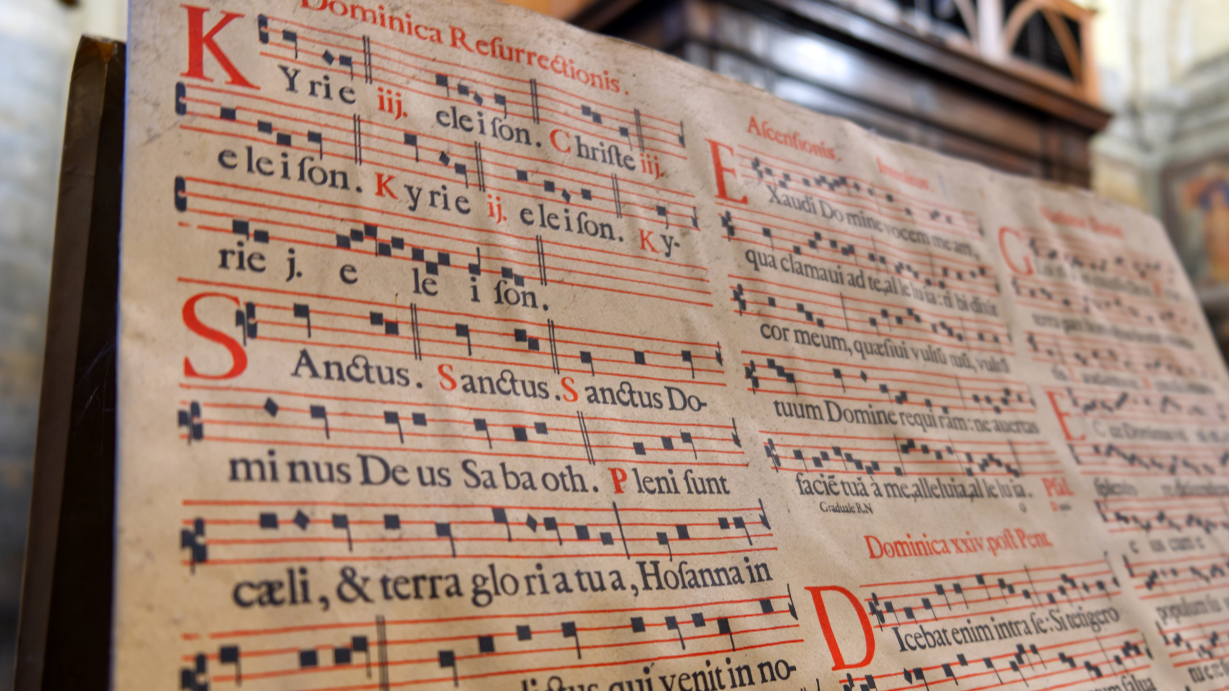
All of this leads me to this important point: not all music is appropriate. That’s especially true when we’re speaking about music in a church building and especially at a Mass. Just because a song or hymn has a religious message or words, does not mean that the style is appropriate. Music comes in many styles: Rock and Roll, Country, Metal, Worship and Praise, Rap, etc. Adding religious words or themes to a song does not make the style sacred. What the Church means by Sacred Music is a genre of music that was created for the worship of God, for His Glory and the sanctification of the faithful. Music at Mass should not draw attention to itself but draw its listeners and singers to God.
Below I have attached some information from the Church Music Association https://churchmusicassociation.org/24faq/. There is a lot more to Sacred Music than what is presented here. Using the internet you can inform yourself in ways previous generations couldn’t. I encourage you to do so.
In Christ Our Lord,

Fr. Thomas Nathe
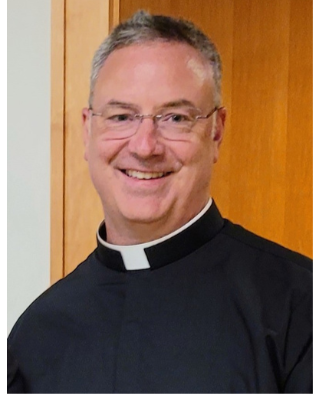
Fr. Nathe
Q: What is sacred music?
A: Sacred music is “that which, being created for the celebration of divine worship, is endowed with a certain holy sincerity of form” (Musicam Sacram). As defined by the Constitution on the Sacred Liturgy, Sacrosanctum Concilium, sacred music’s . . . purpose is “the glory of God and the sanctification of the faithful.”
“As a manifestation of the human spirit,” said John Paul II in 1988, “music performs a function which is noble, unique, and irreplaceable. When it is truly beautiful and inspired, it speaks to us more than all the other arts of goodness, virtue, peace, of matters holy and divine. For good reason it has always been, and it will always be, an essential part of the liturgy.”
Q: What are the characteristics of sacred music?
A: In Pope Saint Pius X letter on Sacred Music, he distinguished three characteristics: “sacred music should consequently possess […] sanctity and goodness of form, which will spontaneously produce the final quality of universality” (§2).
Concerning sanctity, for music to be sacred means it is not the ordinary, not every day. It is set aside for the purpose of glorifying God and edifying and sanctifying the faithful. It must therefore exclude all that is not suitable for the temple — all that is ordinary, every-day or profane, not only in itself, but also in the manner in which it is performed. Sacredness, then, is more than individual piety; it is an objective reality.
Concerning goodness of form, the Latin speaks of bonitate formarum, “goodness of forms”: this refers to the tendency of sacred music to synthesize diverse ritual elements into a unity, to draw together a succession of liturgical actions into a coherent whole, and to serve a range of sacred expressions. Each chant of the various Gregorian genres presents a masterly adaptation of the text to its specific liturgical purpose. No wonder the Church has consistently proposed chant as the paradigm of sacred music.
Sacred music must be true art. Beauty is what holds truth and goodness to their task. To paraphrase Hans Urs von Balthasar, without beauty, the truth does not persuade, goodness does not compel. Beauty, as expressed in the Church’s liturgy, synthesizes diverse elements into a unified whole: truth, goodness, and the human impulse to worship.
Concerning universality, sacred music is supra-national, equally accessible to people of diverse cultures. God is the same everywhere, thus the music that serves Him should be universal as well.